
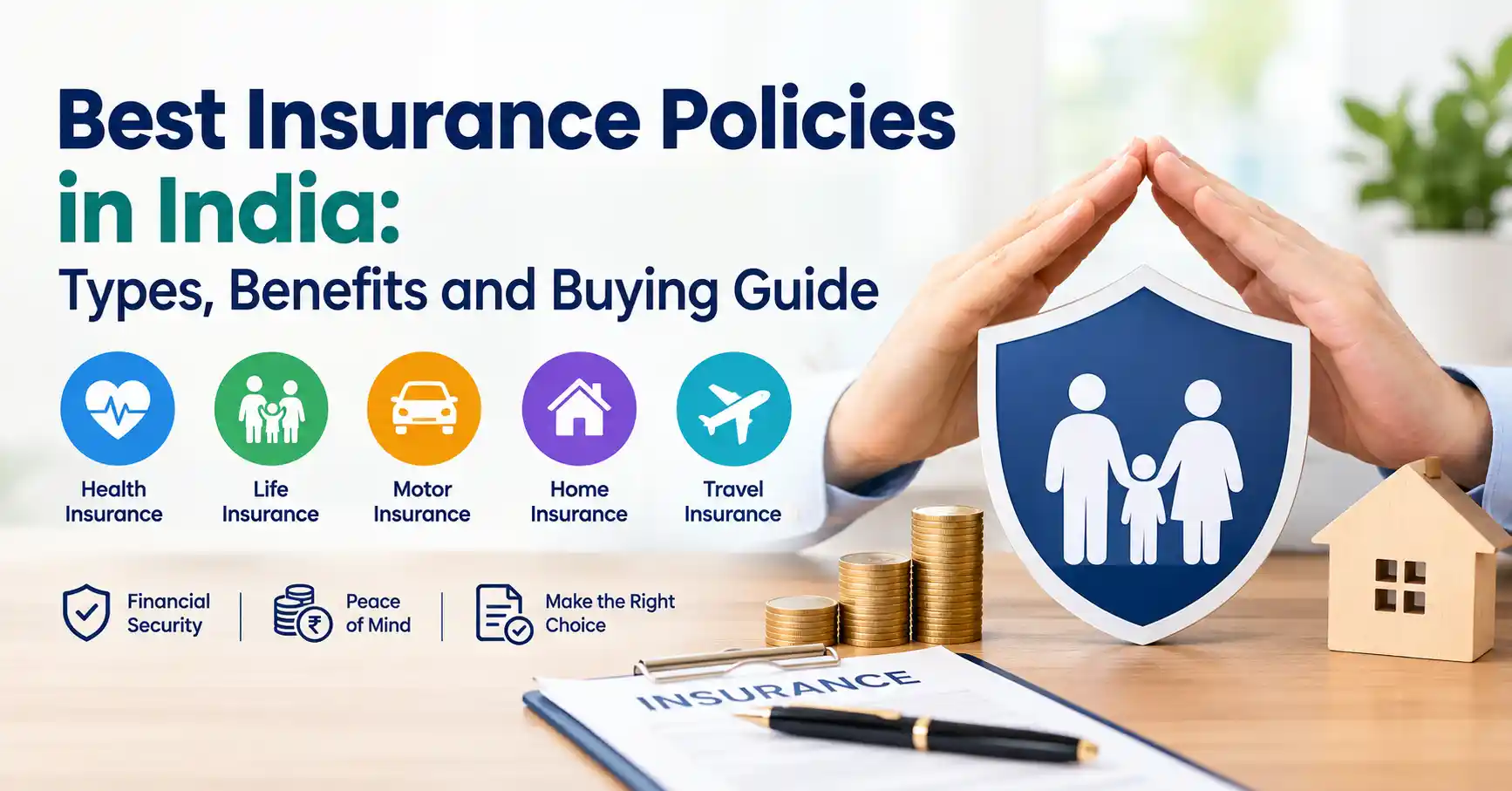
The best insurance Policies in India depends on what you want to protect.Health insurance covers eligible medical expenses, helping reduce Term life insurance protects your family financially if you die during the policy term. Motor insurance covers certain risks related to your vehicle.
- Before choosing Insurance Policies , compare its coverage, premium, exclusions, waiting periods and claim process. Also, check the insurance company’s financial strength and customer service record.
- No single insurance Policies is ideal for everyone; the right choice depends on your individual needs, budget, and financial goals. Your age, income, family responsibilities, health needs, existing coverage and budget will help you decide which policy is right for you.
Key Takeaways
- Choose health insurance to safeguard your savings against covered medical expenses.
- Choose term life insurance to provide financial security for your family if they depend on your income.
- Buy the motor insurance required by law and consider extra coverage if needed.
- Compare policy coverage, exclusions, waiting periods, and claim conditions rather than choosing a policy based on premium alone.
- Provide correct details about your medical history and other information requested by the insurer.
- Check the latest policy documents and official information before buying insurance.
Types of Insurance Policies in India
The best insurance policy for you depends on your personal needs and the financial protection you require.
1. Health Insurance

Health insurance covers eligible medical costs according to the policy’s terms and conditions.
Depending on the Insurance Policies, it may cover hospitalisation, certain medical procedures, pre- and post-hospitalisation expenses and some day-care treatments.
Who should consider it?
- People who want help paying hospital bills.
- Families looking for individual health plans or shared medical coverage.
- Self-employed people who do not have health benefits from an employer.
- People who want health coverage that does not depend on their job.
- Senior citizens looking for suitable medical coverage, subject to eligibility and policy terms.
What to check before buying:
- The sum insured, which is the amount of coverage provided under the policy, and any sub-limits.
- Room-rent limits and intensive care unit (ICU) limits.
- Co-payment and deductible requirements.
- Waiting periods may apply to specific illnesses and pre-existing medical conditions.
- The hospital network and cashless claim process.
- Restoration benefits and the conditions for using them.
- Renewal rules, premium changes and exclusions.
- A Insurance policy with a lower premium may have limits that increase your out-of-pocket expenses. Compare the benefits and conditions carefully before choosing one.
2. Term Life Insurance

Term insurance provides life coverage for a fixed period. If the insured person dies during this period and the claim meets the policy conditions, the nominee or beneficiary receives the applicable death benefit.
A standard pure term insurance plan generally does not pay a maturity benefit if the insured person survives the policy term.
Who should consider it?
- People whose families depend on their income.
- Parents who have children depending on them financially.
- People with loans that could become a burden on their families.
- People who want to provide financial support to their spouse or other dependants.
- Before deciding how much life cover you need, consider your family’s future living expenses, outstanding loans, children’s education costs, existing savings and other life insurance policies.
- Do not choose a sum assured simply because it is a popular amount. Choose coverage based on your family’s financial needs.
3. Other Life Insurance Policies
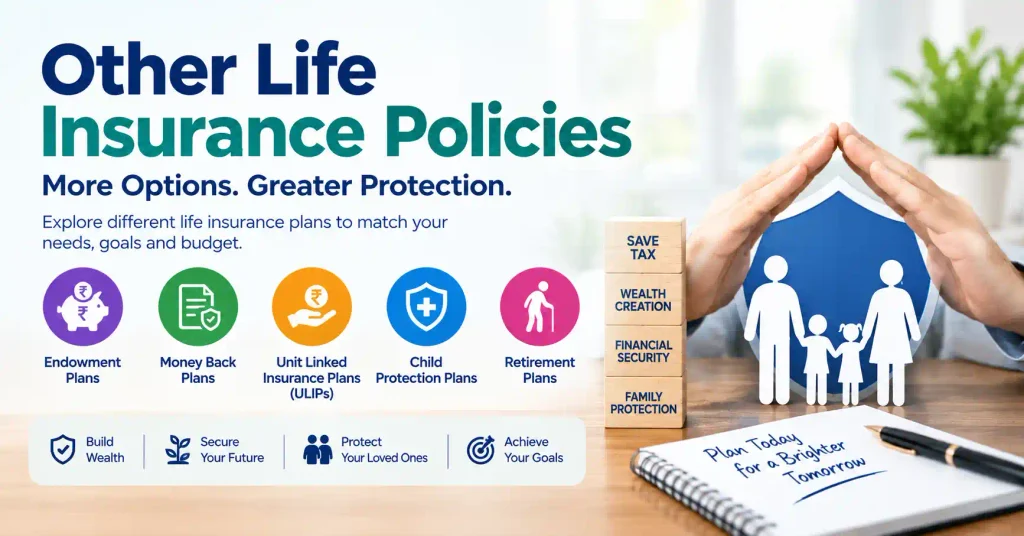
Life insurance also includes savings plans, endowment plans, money-back plans, whole-life plans and market-linked insurance products. The available plans vary by insurance provider. These policies may offer life coverage along with savings, investment opportunities, or maturity benefits.
Before buying one, check:
- Whether the returns are guaranteed or depend on investment performance.
- What happens if you stop paying premiums.
- Whether you could lose money if you surrender the policy early.
- What charges, limits and conditions apply.
- How much life cover the policy provides.
- Do not compare a savings-based life insurance policy directly with a pure term plan without considering their different purposes.
4. Motor Insurance

Motor insurance covers certain risks related to cars and two-wheelers.
Third-party liability insurance is generally required by law for vehicles used on public roads in India. A comprehensive or package policy may also cover damage to your own vehicle, subject to the selected coverage and policy exclusions.
Compare these features:
- Third-party liability coverage.
- Own-damage protection.
- Insured Declared Value (IDV), where applicable. IDV is the value used to calculate certain vehicle insurance benefits.
- Deductibles and compulsory excess.
- The network of cashless garages.
- Optional benefits, such as zero depreciation, if offered and suitable for your needs.
- Exclusions related to vehicle use, damage and policy conditions.
- A low-cost motor insurance policy may not offer sufficient coverage for your vehicle.
5. Personal Accident Insurance

Personal accident insurance may provide benefits for accidental death, disability or other covered events, depending on the policy.
It can help people whose income or family finances could be affected by an accident. However, it does not replace health insurance or term life insurance.
Before buying a policy, check how it defines permanent and partial disability. Also, review the benefit amounts, exclusions and documents needed to make a claim.
6. Travel Insurance

Travel insurance may cover certain emergencies and losses during domestic or international trips.
- Depending on the policy, benefits may include emergency medical expenses, trip interruption, baggage loss or travel delays.
- Before buying, check the destination restrictions, covered activities, medical exclusions, claim limits and rules for pre-existing medical conditions.
- If you need travel insurance for a visa application, check whether the policy meets the destination country’s requirements.
Which Insurance Policy Best Suits Your Needs?
- Your situation
- Policy type to consider
- Main benefit
You want help paying eligible hospital expenses
- Health insurance
- Medical expense protection
- Your family depends on your income
- Term life insurance
- Financial protection for your dependants
- You own a car or two-wheeler
- Motor insurance
- Legal liability coverage and optional vehicle protection
- You want protection against certain accidental injuries or disability
- Personal accident insurance
- Financial support for covered accidents
- You are travelling abroad
- Travel insurance
- Protection against specified travel risks
- You want life cover along with savings
- Suitable savings-based life insurance
- Combined benefits, depending on the policy terms
- These are starting points, not personal recommendations. You may need more than one type of insurance because each policy protects you against different risks.
How to Select the Right Insurance Policies in India
Step 1: Identify Your Main Financial Risk
- Think about what could cause the biggest financial problem for you or your family.
- For example, a large hospital bill could reduce your savings. The loss of an earning family member could affect your household income for many years.
- These risks require different types of insurance.
Step 2: Calculate the Coverage You Need
- For health insurance, consider hospital costs in your area, family size, existing medical coverage and how much you can afford to pay yourself.
- For life insurance, consider your dependants’ living expenses, outstanding loans, future financial goals, existing assets and current life cover.
- For motor insurance, consider your vehicle’s value, your ability to pay for repairs or replacement, and the extra protection you want.
- Do not choose coverage only because a salesperson recommends it or an advertised package looks attractive.
Step 3: Compare at Least Three Suitable Policies
- Request quotes for policies with comparable coverage, durations, and benefits whenever possible.
- Compare the premiums along with exclusions, coverage limits, deductibles, waiting periods, renewal rules and claim procedures.
- A cheaper premium may not be the best choice if the policy offers limited coverage.
Step 4: Check the Insurance Company’s Record
- Check the insurer’s official reports for information about claims, complaints, financial strength and solvency.
- For life insurance, find out whether the claim settlement ratio measures the number of claims settled or the amount paid. For health and general insurance, review the available claims and customer service information for the insurer and product.
- Always check the reporting period and how the figures were calculated before comparing insurers. A high claim settlement ratio does not guarantee that your claim will be approved.
Step 5: Read the Policy Documents
- Read the policy wording and Customer Information Sheet before paying.
- Check what the policy covers, its exclusions, waiting periods, claim requirements, premium payment rules and cancellation or surrender conditions.
- If you do not understand a term, ask the insurer to explain it in writing before you buy the policy.
Step 6: Provide Accurate Information
- Fill in the proposal form honestly. Provide all the information requested, including your medical history, smoking status, occupation and existing insurance, where applicable.
- Do not hide a medical condition or provide incorrect details to get a lower premium. Incomplete or incorrect information can cause problems during policy approval or when you make a claim.
Step 7: Check Your Policy After Buying
After receiving your policy, check the policy schedule and other documents.
- Make sure your personal details, coverage amount, nominee information and selected benefits are correct.
- Keep your policy documents, premium receipts and claim contact details in a place where you and your family can find them easily.
Important Insurance Features to Understand
- Term
- Simple meaning
- Why it matters
Premium
- The cost you pay to keep your insurance policy active.
- Check whether you can afford it over time
- Sum insured
- The coverage limit used in many general insurance policies
- Understand how much the insurer may pay under the policy terms
- Sum assured
- The amount of life cover or benefit stated in the policy
- Know the benefit payable for a covered event
- Waiting period
- A period when certain benefits may not be available
- Know when coverage starts for specific conditions
- Exclusion
- A situation, condition or expense the policy does not cover
- Avoid surprises when making a claim
- Co-payment
- The part of an eligible expense you must pay
- Understand your share of the cost
- Deductible
The amount you need to pay out of your own pocket before the insurer covers eligible expenses, according to the policy terms.
Understand how much you may have to pay yourself when making a claim.
Nominee
- A person named to receive or help receive applicable policy benefits, subject to the law and policy terms
- Keep nominee details correct
- Claim settlement ratio
- A measure of claims settled compared with the claims counted in the reported figures
- Use it as one comparison factor, not as a guarantee of future claims
- The meaning of these terms may vary depending on the type of insurance and the policy conditions.
How to Compare Insurance Companies
Do not choose an insurance company based only on its advertisements, brand name or one claim-related figure.
Use this checklist:
- Regulatory status: Check whether the insurer is authorised to offer that type of insurance in India.
- Coverage: Make sure the policy meets your needs.
- Exclusions: Check which situations the policy does not cover.
- Claim service: Review the available information about claims, complaints and grievance handling.
- Financial information: Check relevant financial and solvency reports, where available.
- Hospital network: For health insurance, check whether suitable hospitals in your area offer cashless services under the policy.
- Affordable premiums: Make sure you can continue paying the premiums over time.
- Policy documents: Check that the benefits promised in advertisements are included in the actual policy terms.
For a fair comparison, use information from the same reporting period and compare similar policies.
What Does Insurance Cost in India?
The cost of the best insurance policy in India varies based on your needs and the coverage you choose. The cost depends on the type of insurance, coverage amount, your personal details and the insurer’s assessment of risk.
Insurance type
Health insurance
Age, location, sum insured, family size, medical history and selected benefits
Term life insurance
Age, health, smoking status, life cover, policy term and optional riders
Motor insurance
Vehicle type, insured value where applicable, location, claim history and selected coverage
Personal accident insurance
Coverage amount, occupation, policy benefits and the insurer’s assessment
Travel insurance
The destination, length of the trip, traveller’s age, coverage limits, and chosen benefits.
Get quotations from insurers or authorised insurance distributors. Treat online estimates as approximate until the insurer confirms the final premium and policy terms.
Common Insurance Mistakes to Avoid
A cheaper policy may have limited coverage, higher deductibles, or exclusions that do not meet your needs.
Compare the actual benefits and conditions before choosing a policy.
Assuming Every Medical Expense Is Covered
- Health insurance policies have limits and exclusions. Some expenses may not be covered, and certain treatments may have waiting periods.
- Read the policy terms to understand what you may need to pay yourself.
Depending Only on Employer-Provided Insurance
- Your employer’s health insurance may change or end when you leave your job.
- Consider whether you need a separate policy to maintain coverage for yourself and your family.
Hiding Medical or Personal Information
- Incorrect information can cause serious problems when you make a claim.
- Answer all proposal-form questions honestly and keep a copy of the information you provide.
Ignoring Renewal and Payment Rules
- Failing to pay your premium on time may affect your insurance coverage. The outcome depends on the policy’s grace period and other conditions.
- Check your renewal date and payment rules. Contact your insurer if you miss a payment.
Treating Insurance as a Guaranteed Investment
Insurance and investment products have different purposes.
If a policy combines insurance with savings or market-linked investments, check its benefits, risks, charges, access to your money and possible returns before buying.
How to Buy an Insurance Policy Online
Choose the type of insurance. Decide whether you need health, term life, motor, personal accident or travel insurance.
- Shortlist suitable policies. Visit official insurer websites or reputable insurance comparison websites.
- Compare policy details. Check premiums, coverage limits, exclusions, waiting periods and claim conditions.
- Fill in the proposal form. Provide accurate personal, medical and other requested information.
- Complete the insurer’s checks. Submit any required documents or medical test results.
- Review the final quotation and policy terms. Check the benefits, premium, payment frequency and conditions.
- Pay through an authorised channel. Keep your payment receipt and proposal reference number.
- Check the issued policy. Confirm your details, coverage, nominee information and selected benefits.
Buying insurance online can make comparisons easier. However, you still need to understand the policy before paying.
What to Do When Your Insurance Claim Is Rejected
If your insurer denies your claim or approves only part of it, review the policy conditions and the reason provided for the decision.
Follow these steps:
- Ask the insurer for the reason for its decision in writing.
- Compare that reason with the policy terms, exclusions and documents you submitted.
- If you believe there is a mistake, ask the insurer’s grievance redressal officer to review the decision.
- Keep copies of claim forms, bills, medical records, letters and the claim rejection notice.
- If the issue remains unresolved, check the current complaint process on the official IRDAI website. Also, check whether you can approach the Insurance Ombudsman.
- Follow the applicable rules and deadlines when raising a complaint. Not every rejected claim is necessarily incorrect, and not every rejection can be overturned.
READ ALSO:Best Student Laptops in India (2026):
Frequently Asked Questions
1. Which Is the Best Insurance Policy in India?
There is no single insurance policy that is best for everyone. Health insurance helps pay eligible medical expenses, term insurance protects dependants financially if the insured person dies during the policy term, and motor insurance covers certain vehicle-related risks.
The right policy depends on your needs, budget, required coverage and the policy’s exclusions and conditions.
2. Which Insurance Policy Is Best for a Middle-Class Family in India?
A family may need health insurance for medical expenses and term insurance for earning members whose income supports the household.
The right coverage depends on family size, age, health, income and existing insurance. Compare individual and family floater health plans before deciding. Also, check whether employer-provided coverage meets your needs.
3. Which Is Better: Life Insurance or Health Insurance?
Life insurance and health insurance offer different types of financial protection. Life insurance provides a death benefit or other policy benefits, while health insurance covers eligible medical expenses. A family may need both because medical emergencies and the loss of an earning family member create different financial problems.
4. How Much Health Insurance Coverage Should I Buy in India?
Consider your family size, ages, medical history, hospital costs in your area, existing coverage and ability to pay expenses yourself.
There is no single coverage amount that suits everyone. Check the sum insured, co-payments, deductibles, room-rent limits and waiting periods to understand how much protection the policy offers.
5. Is Term Insurance Better Than a Traditional Life Insurance Policy?
A pure term insurance plan mainly provides life cover for a fixed period. It generally does not pay a maturity benefit if you survive the policy term.
1 thought on “Best Insurance Policies in India (2026) : Types, Benefits and Buying Guide”